
The rise of Delta-9 THC gummies as a popular cannabis product didn’t happen overnight—it’s the result of decades of scientific research, evolving cannabis laws, and consumer demand for convenient and enjoyable ways to consume THC. Understanding how Delta 9 gummies were discovered involves looking at the discovery of Delta 9 THC itself, the development of edible cannabis products, and the eventual fusion of cannabis science with culinary creativity.
The Discovery of Delta 9 THC
Delta 9-tetrahydrocannabinol (which is also referred to as Delta-9 THC) was discovered and extracted in the 1960s by an Israeli chemist Dr. Raphael Mechoulam. His pioneering work on cannabinoids assisted in discovering the mechanism of action of THC with the human body, especially with the endocannabinoid system, which is a sophisticated system of receptors that control mood, sleep, appetite, etc.
It was through this work by Mechoulam that the science of cannabis was born in addition to opening the floodgates to the possibility of how THC could be utilized medically and recreationally. This body of knowledge that Delta 9 THC was the main psychoactive ingredient in cannabis meant that it would be a focus of more studies and product development.
The Evolution of Cannabis Edibles
Though cannabis-infused foods have a centuries-long history in many cultures, including the so-called “bhang” in India, modern cannabis edibles started to appear more prominently in the 1990s, especially in the places where medical marijuana was legalized. Initially, baked products such as brownies and cookies were the order of the day. They were commonly homemade and considerably inconsistent in strength, taste and quality.
With the rise in legalization in the United States and other nations, the need to have safer, more consistent, and tastier cannabis products also increased. That demand resulted in a boom in professionally produced cannabis-infused edibles, such as candies, chocolates, and beverages, and, ultimately, gummies.
The Birth of Delta 9 Gummies
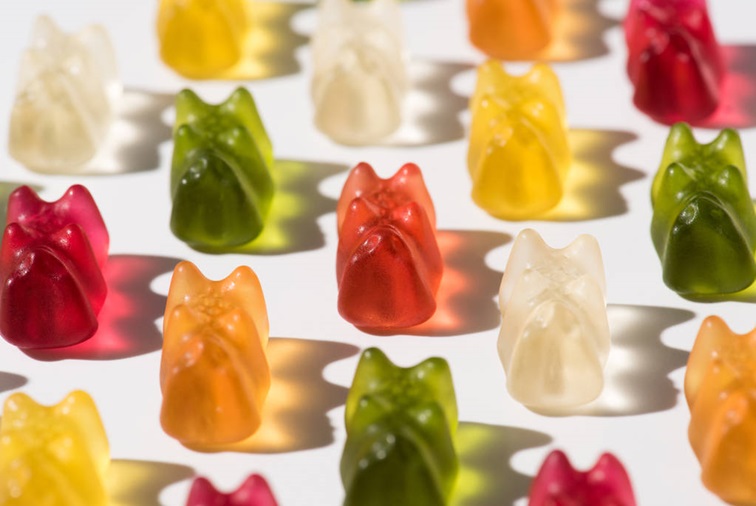
The gummies started to gain traction in the 2010s when cannabis firms started to perfect their infusion methods. Consumers desired a discrete, delicious, and doseable method to utilize good source of THC- and gummies met the requirements flawlessly. By having regulated production, firms could add exact doses of Delta-9 THC per piece, allowing consumers to evade the unreliability of the older homemade edibles.
Delta 9 gummies were not found during a moment of inspiration but rather the natural convergence of consumer demand, cooking, and cannabis technology. The collaboration of food scientists and cannabis extractors was needed to identify stable formulations that enabled the homogenization of THC throughout a gummy matrix without compromising its strength or flavor.
The innovation did not only lie in the capability of creating a THC gummy, but to create one that achieves the same effects consistently, has a longer shelf life and tastes better. Another problem that gummies addressed is the stigma surrounding smoking: it is no longer necessary to smoke but can be eaten like any other candy.
Regulation and Quality Control
Legal cannabis markets also implied more stringent regulations and requirements concerning edibles, such as Delta 9 gummies. These regulations assisted in enhancing the safety and quality of products amid the continued innovation in the extracting, dosing, and preservation of Delta 9 THC. The modern form of Delta 9 gummies is frequently laboratory-tested, properly labeled, and produced in accurate formulations to make them consistent batch after batch. Read this for reference.
Conclusion
Delta 9 gummies, eventually, were invented and found via a serendipity of scientific interest, regulatory shifts, and consumer-directed innovation. Cannabis industry observed the possibility to provide people with THC in a well-recognized and pleasant form, and gummies became one of the most popular methods to enjoy Delta 9.
Their discovery is symbolic of the larger story of cannabis being used clandestinely to rising acceptance into the mainstream. The revolution that started in the laboratory in the 1960s has grown into a contemporary industry providing quality-controlled products that are a combination of wellness, leisure, and taste.